Downspout flushing: where Longwood clogs really hide
A clean trough means little if the downspout below it is plugged. The vertical run is the narrowest part of the whole system.
Why the downspout is the weak point
A gutter may be several inches wide, but the downspout it feeds is often only two or three inches across. Acorn caps, wet leaf pulp and roof grit travel with the water and lodge at the first bend. One plug there backs water up along the entire run.
Where the downspout ends matters too. Some discharge onto the lawn, some into a splash block, and some into a buried pipe. Buried lines can silt up with grit that washes off roofs and yards.
What flushing looks like
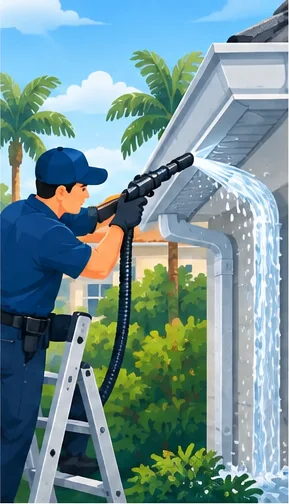
Flushing means pushing water through the downspout from the top with a hose, then watching it leave at the bottom. A strong, steady flow means the line is open. A trickle, a gurgle or water coming back up the pipe means something is lodged.
A provider may use a hose, compressed air or a hand tool to break up the blockage. Which method they use depends on the material and how tight the bends are, and it is their call.
A flush is easy to confirm yourself afterward: run a hose into the trough and watch the outlet.
When to schedule it
The National Weather Service Melbourne office puts the median start of the wet season at May 27 for the Orlando and Sanford area, with a median end of October 15. Getting downspouts moving ahead of late May, after the oak pollen and catkin drop, means the first big storms meet open drains.
A second check after the winter laurel oak leaf drop catches whatever the fall left behind. Heavy tropical rain tests everything at once, so lines that were partly open in spring tend to show their weaknesses then.
Clear it before the rain does the sorting
Request a free quote and an independent Longwood provider should follow up to confirm scope and price.